
Industrial Decarbonization and Chemical Production
Industrial Decarbonization and Chemical Production
Converting captured CO₂ into syngas, chemicals, and fuels
Markets: Industrial emitters, chemical producers, synthetic fuel developers
Scope: Paper studies, techno-economic evaluation, pilot system supply
Status: Studies complete; customer pilot facilities in build
Overview
OxEon has performed paper studies for industrial and chemical-sector customers evaluating carbon capture and utilization pathways built on solid oxide electrolysis. These studies assess CO₂-to-CO conversion through dry CO₂ electrolysis, and CO₂ + steam co-electrolysis for direct syngas production, sizing the electrolysis system against a customer's captured CO₂ stream and their intended downstream product.
Each study covers process configuration, energy and heat integration, product gas composition and H₂:CO ratio control, and the practical feasibility of routing captured CO₂ into a chemical or fuel synthesis train rather than to storage.
Initial findings have been positively received. Multiple customers have moved from paper study directly into hardware, and are now building pilot facilities around OxEon's solid oxide electrolysis test systems.
Why it matters
Captured CO₂ has to go somewhere. Sequestration treats it as a disposal problem and carries the cost accordingly. Solid oxide electrolysis treats it as a feedstock, converting it into CO or into syngas at a controlled H₂:CO ratio — the same building blocks that already feed Fischer-Tropsch, methanol, and other established synthesis routes.
Because solid oxide systems operate at high temperature, they can take advantage of waste heat that industrial sites already produce, improving overall system efficiency relative to low-temperature electrolysis.
How it works
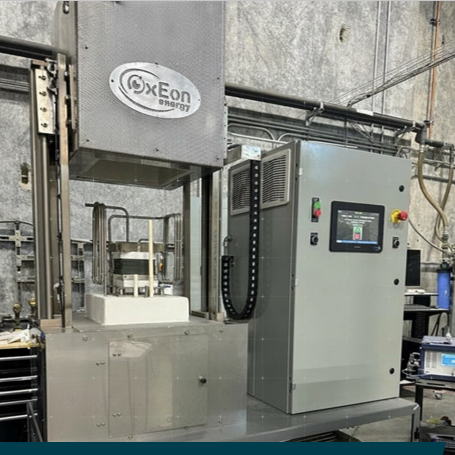
OxEon solid oxide test systems are available in four operating modes:
- Steam electrolysis: hydrogen production from steam
- Co-electrolysis: CO₂ and steam converted to syngas at a tunable H₂:CO ratio
- Dry CO₂ electrolysis: CO₂ converted directly to CO
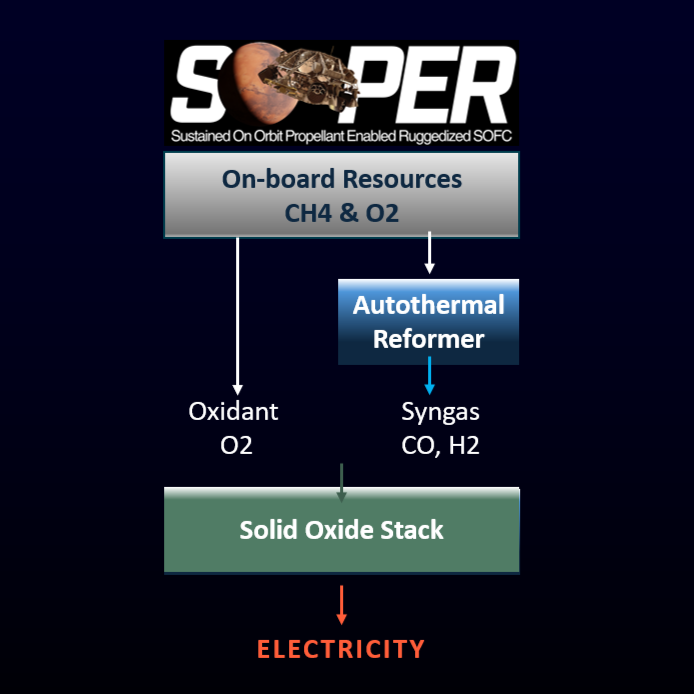
- Fuel cell: power generation from hydrogen or hydrocarbon fuels
OxEon manufactures its own solid oxide stacks, and a single stack design operates in all of these modes. Test systems are configured to the customer's application — built for a specific mode, or designed to support several. Specifying multi-mode capability at the outset lets a customer evaluate more than one pathway on a single platform.
Applications
- Carbon capture and utilization at industrial point sources
- Syngas generation for chemical and fuel synthesis
- CO production as a chemical feedstock
- Decarbonization pathway evaluation ahead of capital commitment
Learn more
To discuss a carbon utilization study or a solid oxide test system, contact OxEon Energy.
info@oxeonenergy.com | +1 801 677 3001

Keep Reading

Discover What's Next.
OxEon is reshaping energy storage for a world that demands clean power. Explore our technology, our team, and the future we're building together.