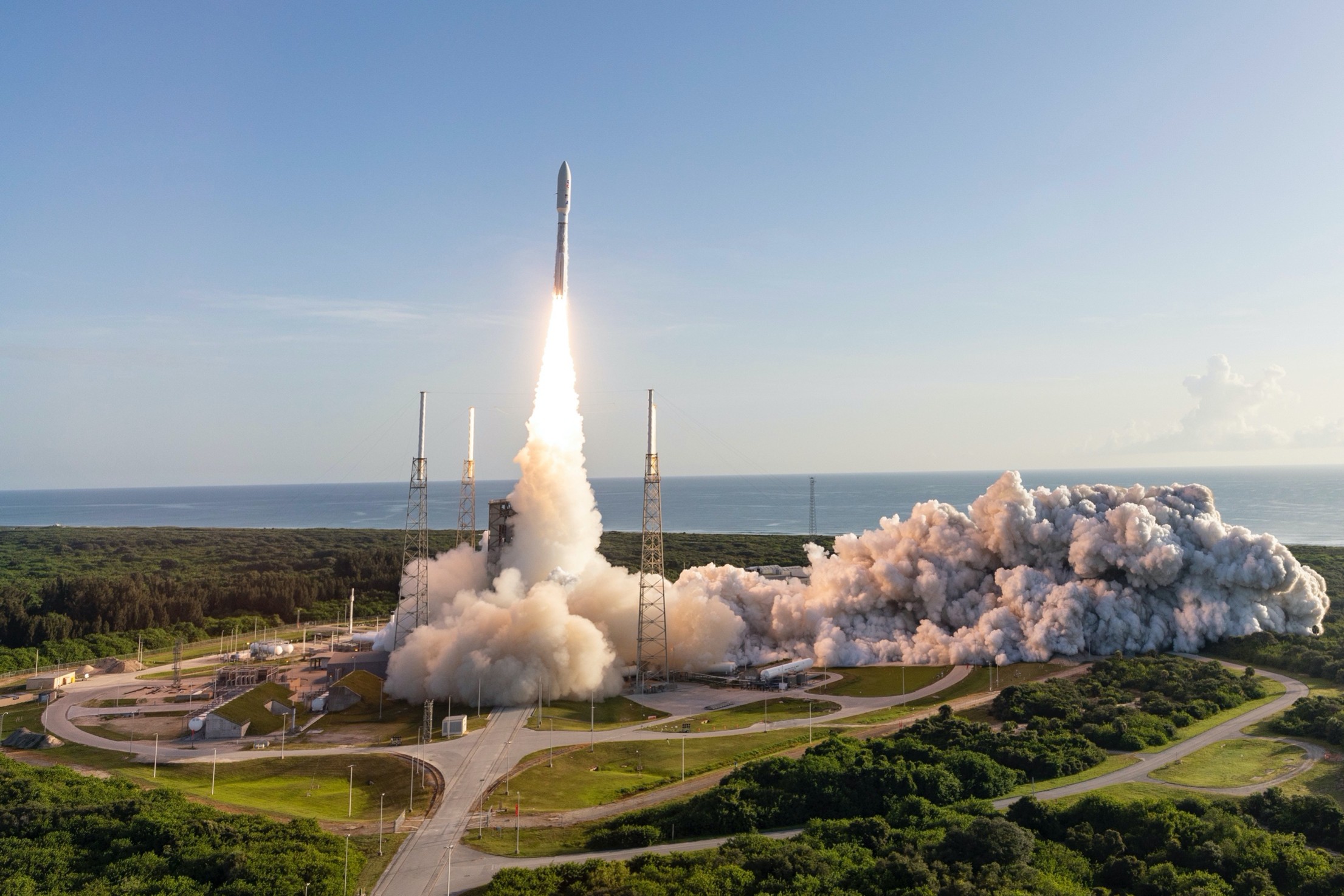
SOOPER SOFC
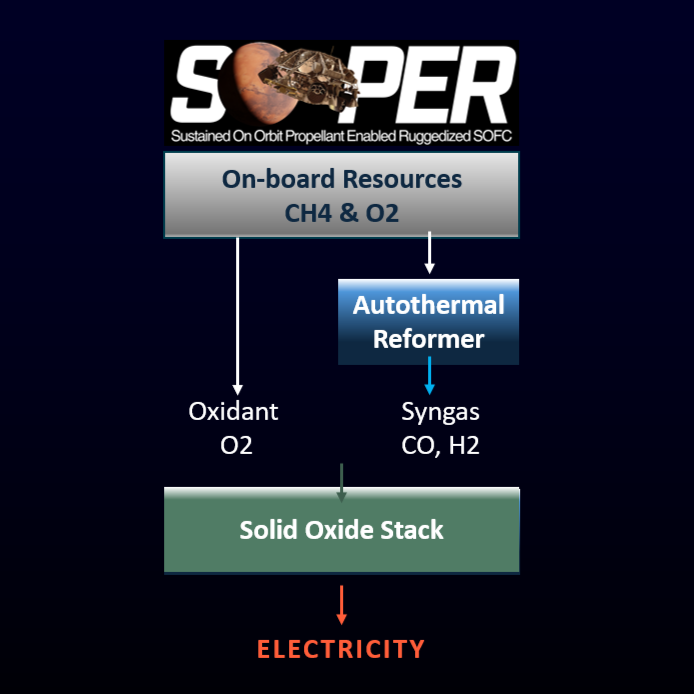
SOOPER SOFC
Solid oxide fuel cell power for Mars entry, descent, and landing
Customer: NASA
Contract: No. 80NSSC25C0454 (SBIR Phase III)
System-level testing: NASA Johnson Space Center, early 2027
Status: In execution
Overview
SOOPER is a 2-kilowatt solid oxide fuel cell (SOFC) power generation system designed to supply direct current electricity to a Mars lander through entry, descent, and landing. The system launches dormant, activates in Mars orbit, and operates continuously through the EDL sequence, drawing methane and oxygen directly from the vehicle's onboard propellant supply.
OxEon will design, build, and tested the SOOPER system in-house, and an upcoming test campaign at NASA Johnson Space Center will validate fixture interfaces, control automation, and operational performance under conditions representative of Mars EDL power demands, advancing the system to TRL 6.
Why it matters
Landers carry methane and oxygen for propulsion regardless. SOOPER treats that propellant load as a dual-use energy reserve — converting a mass the vehicle already manifested into electrical power, rather than adding a battery bank whose mass scales linearly with the energy required.
Over mission durations measured in hours to days, that architecture delivers a substantial energy density advantage over lithium-ion alternatives at equivalent power levels. At Mars mission scales, where every kilogram delivered to the surface carries significant launch cost, the difference translates directly into reduced system mass and mission cost.
Technical approach
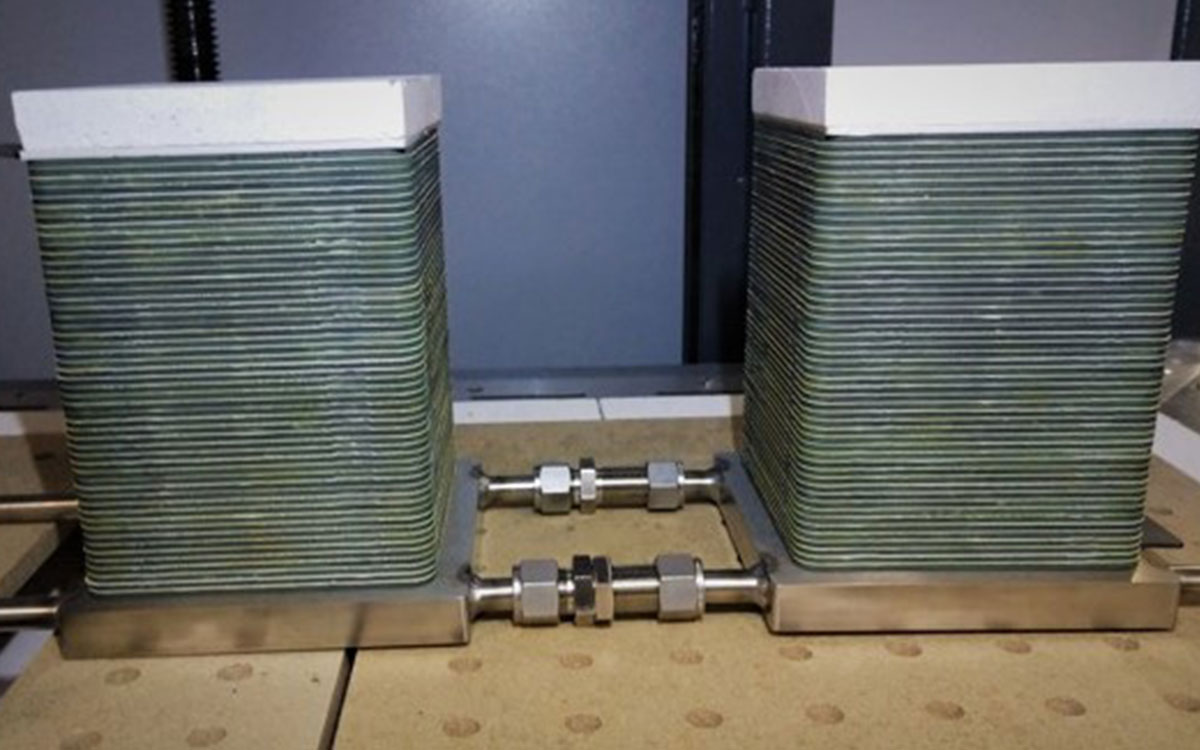
Propellant-fed fuel cell operation. The SOFC stack electrochemically converts CH₄ and O₂ feeds into DC power without combustion or moving conversion machinery.
Pure-oxygen oxidant management. Operating a solid oxide stack on pure oxygen rather than air removes the thermal ballast that nitrogen normally provides. SOOPER's design addresses the resulting thermal management challenge through dedicated stack and balance-of-plant engineering.
Dormant launch, in-flight activation. The system is designed to survive launch and cruise in a dormant state, then activate on command in Mars orbit ahead of the EDL sequence.
Test campaign
System-level testing at NASA Johnson Space Center in early 2027 covers:
- Fixture interface validation
- Control automation and startup sequencing
- Performance mapping under EDL-representative conditions
- Environmental qualification - thermal vacuum, shock, and vibration
Heritage and continuity
OxEon is the only solid oxide company in the world with flight hardware experience. That heritage was established by NASA's Mars Oxygen In-Situ Resource Utilization Experiment (MOXIE), which operated aboard the Perseverance rover on the Martian surface. OxEon built the solid oxide electrolysis stack at the heart of the instrument that converted the Martian CO₂ atmosphere into O₂.
SOOPER carries that heritage forward into a full power-generation system. In turn, SOOPER's stack performance data, controls architecture, and integration lessons learned feed OxEon's lunar surface solid oxide power work, where the same hardware-proven technology is being adapted to the thermal and duration demands of lunar night survival. The line runs MOXIE → SOOPER → lunar surface power, with each program delivering validated hardware rather than untested concepts to the next.
Applications
- Planetary lander EDL power
- Surface power from stored or in-situ propellants
- Dual-use propellant architectures for crewed and robotic missions
- Terrestrial high-energy-density power where fuel and oxidant are already on hand

Keep Reading

Discover What's Next.
OxEon is reshaping energy storage for a world that demands clean power. Explore our technology, our team, and the future we're building together.